Technical specifications for IC660ELB912
Brand GE Fanuc
Series Genius I-O
Manufacturer GE Fanuc/Emerson Automation
Series PC Interface Module (PCIM)
Part number IC660ELB912
Series Genius I/O
Part number IC660ELB912
Product Description MicroGENI subroutine
Compatible PCIM card single-slot PCI (IC660ELB921); Dual channel PCI (IC660ELB922).
The memory requirement is 16 KB
Power required 5 volts DC, 400 MA
Current consumption 1.0 amp (single-channel PCIM); 1.5 amps on a dual-channel PCIM with two subboards
Single-channel PCI IC660ELB921
The memory requirement is 16K bytes
The shared memory is 16KB
Dual-channel PCIe IC660ELB922
Status LED GENI OK, COMMS OK
Communication protocol Genius protocol
Nooooo. Number of devices supported per sub-card 30
Compatibility IBM PC/ AT/ XT
LED indicator GENI good; Normal communication
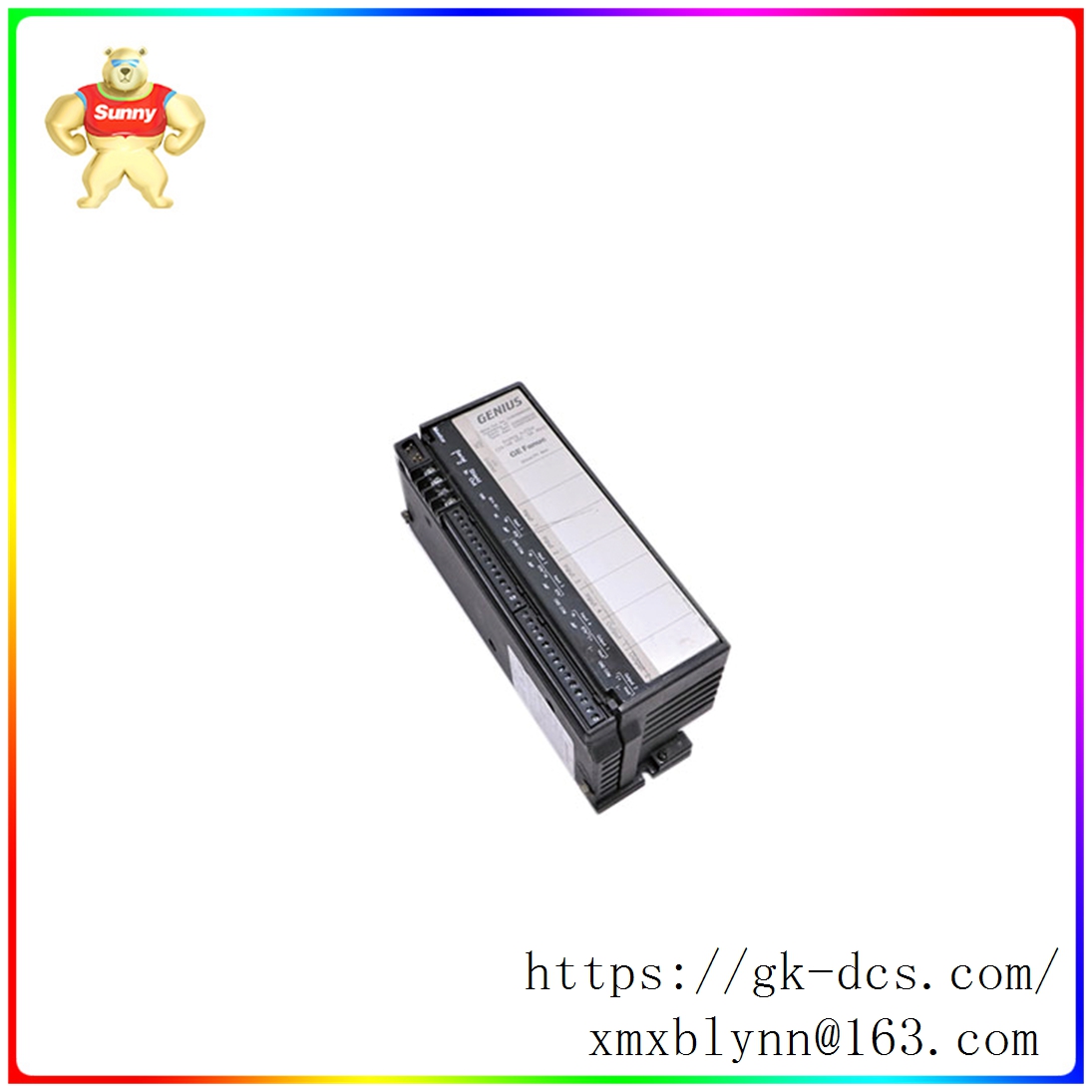
IC660ELB912 is the Genius network interface card. This module is a sub-board of the IBM PC Interface Module (PCIM). The card is mounted on a single - or two-slot PCIM module and enables the I/O controller function of the host controller, allowing remote I/O devices to be controlled, monitored, and managed via the Genius I/O network. This sub-board along the PCIM card was previously manufactured by GE Fanuc and is now owned by Emerson Automation. The IC660ELB912 is responsible for performing housekeeping tasks, such as initializing and fault managing up to 30 devices residing on the same Genius I/O network. It maintains up-to-date data images of controlled devices and is able to exchange data with other controllers over the same network by sending and receiving background messages that are not related to I/O commands or global data. The host PCIM device provides status LED indicators to determine the operation of the connected subboards, specifically GENI OK and COMMS OK. It supports a variety of configurable data rates such as 38.4K, 76.8K, 153.6K standard or 153.6K extension. If two (2) child boards are connected to a two-slot PCIM, and each child board is connected to a separate Genius I/O bus, each child board must be set to the same baud rate as the card is connected to. In addition, two subboards can be connected to the same bus, so each subboard must be configured with the same baud rate. A single child board requires 16KB of host memory, and if two (2) children are installed, 32KB of host memory is required.
The IC660ELB912 Micro GENI subboard is a network interface board of GE Fanuc. It belongs to the Genius I/O family of modules and PLC components. It has backward compatible modules, shared RAM, and 16 KB of memory. The micro-GENI subboard can be connected to a single - or two-slot IBM PC interface module (PCIM) and requires a 5-volt DC rated power supply to provide logic power. The IC660ELB912 Micro GENI subroutine can be easily installed by using gaskets and screws. It comes with 2 status indicator leds to inform the operator of the status of the equipment, these LED leds are GENI OK LED and COMMS OK LED, which show the operation and communication status of the equipment respectively. 2 leds are located on the panel of the module to display the operation and communication of the device. The IC660ELB912 Micro GENI Network Interface Board is a universal I/O controller designed for Genius I/O systems. It provides fault detection for up to 30 bus modules. All communication signals from this module are buffered to the host bus via the motherboard. It also provides effective communication. The module's shared RAM is optimized for IBM personal computers. This system memory stores buffer data, I/O data, and other information. It provides users with the tools to use remote I/O. The IC660ELB912 Micro GENI daughter board features a 6303 microprocessor that provides optimal message writing capabilities and provides maximum memory capacity. The child board comes with a DIP switch for configuration. During installation, be sure to leave at least 1/8 inch of space between modules to provide airflow needed for cooling.


