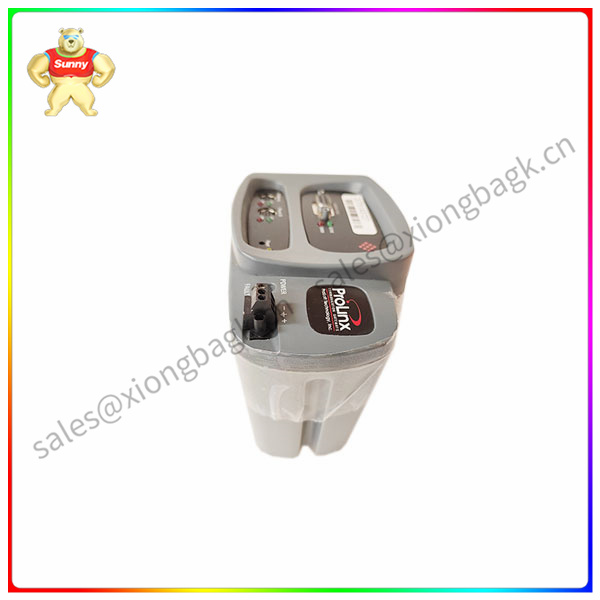
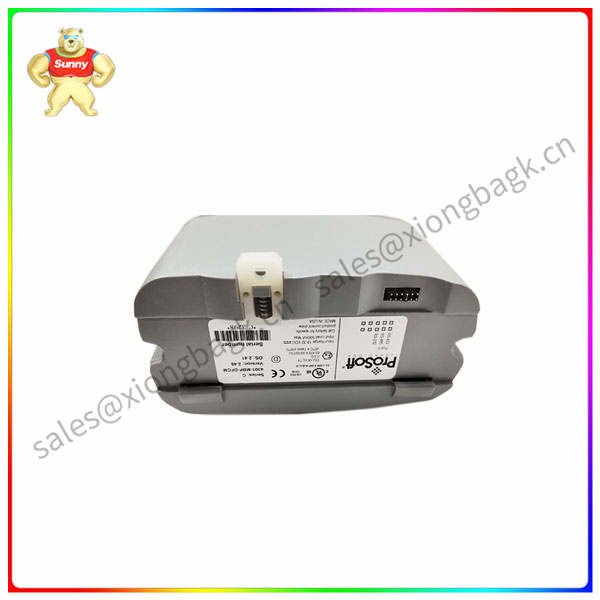

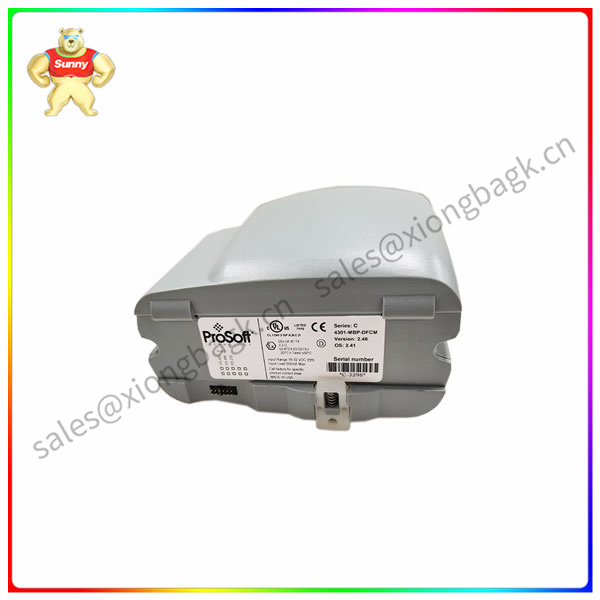
4301-MBP-DFCM PROSOFT Technical specifications
4301-MBP-DFCM Redundancy refers to the repeated configuration of some system components. When the system fails, the configured components step in and take over the work of the faulty components, thereby reducing the system fault time.
Modular redundancy refers to the use of a compound modular structure [1] on the system structure, when the - component fails, the structure can be automatically or manually reconstructed, and the postal component replaces the faulty component, and the system is degraded
With the exception of the faulty components, the remaining parts still maintain normal operation.
The 4301-MBP-DFCM redundancy technology is to add more devices to ensure that the system works reliably. Modular redundancy refers to the layering of the system into different functional modules and the use of de-technology. When system
When a function module fails, the redundant function module structure replaces the faulty module to make the system work normally. Modular redundancy is a dynamic redundancy technology, which belongs to the category of hardware redundancy. Dynamic redundancy
Refers to the use of standard module configuration, once the fault location is detected and diagnosed, the system can be reorganized or restored, and continue to operate normally.
4301-MBP-DFCM Method for adding certain hardware devices for the purpose of detecting or shielding faults. Common methods are as follows:
One of the methods of hardware fault tolerance is hardware stacking redundancy, which can be obtained at the physical level through the repetition of components (such as string, parallel, quadruple components of the same components, etc.).
Another - the hardware fault-tolerant method is called standby reserve redundancy. The system has a total of M+1 modules, of which only one is in the working state, and all M blocks are in the standby state. - But there's something wrong with the working module
It immediately switches to a standby module, and when the replacement reserve module fails, it switches to another reserve module until the resources are exhausted, obviously, such a system must have an error detection and switching installation
Buy.
The 4301-MBP-DFCM hybrid redundancy system is a combination of stacked redundancy and standby reserve redundancy. When a module in the stacking redundancy fails, it is removed immediately and replaced with a fail-free standby
Modules. This method can achieve high reliability.


