Part Number: 5503-279
Manufacturer: Woodward
Product type: High Density Versatile Input Module
Repair: 3-7 Day
Failure for 13 LED Flashes: Dual Port RAM Error
Inputs: 4-20 mA
Manual: 26166V2, 26166V3, and 26167V1
Channels: Thirty-Four
LEDs: 2
Potentiometer:s None
Quantity of Thermocouple Inputs 24
Availability: In Stock
Country of Manufacture: United States (USA)
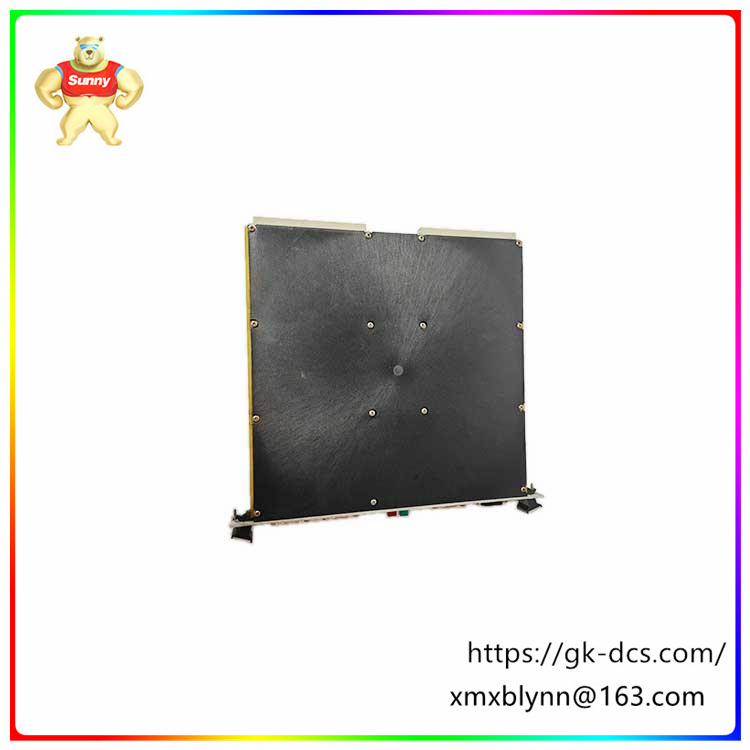
The 5503-279 is a high density multifunction input module developed by Woodward. Each configurable HDVIM module is equipped with circuits that can handle a total of 34 analog inputs and 2 cold-end inputs. These inputs can be divided into two main types :4-20 mA inputs and thermocouple inputs, and 4-20 mA inputs and RTD(resistance temperature detector) inputs.
trait
Of the 34 analog inputs, 24 can be configured as 4-20 mA inputs or thermocouple inputs. This versatility enables users to adapt the module to the specific needs of their application, whether it involves current signals using thermocouples or temperature measurements.
The remaining 10 analog inputs on the module can be configured as 4-20ma inputs or RTD inputs. This flexibility further enhances the module's adaptability to various control and monitoring scenarios that require RTD sensors for temperature measurement.
To ensure reliable connection and communication with the CPU board, configure a 34-channel HDVIM module through the VME bus interface. This widely used interface standard allows seamless data exchange between modules and CPU boards, enabling smooth integration of the entire control system.
The isolation design of the module improves the safety and reliability of the module. The first 12 thermocouple /4-20 mA inputs are isolated into a group, which means they are isolated from other inputs and control common ends. This isolation prevents any potential interference or crosstalk between input groups, ensuring accurate, noise-free data is collected for critical temperature measurements.
Similarly, the second 12 thermocouple inputs and the first 4 RTD/4-0 mA inputs are also isolated into groups, separate from other inputs and control common ends. This additional isolation further improves the stability and accuracy of the data obtained from these input channels, especially when processing sensitive temperature measurements using thermocouples and RTDS.
Controls
Configurable modules offer a high degree of versatility in input configuration to meet a wide range of measurement requirements. The module can be fully configured with 4-20 mA analog inputs, giving users the flexibility to choose the type of input that best suits their specific application.
Of the 34 available channels, the first 24 can be individually configured with 4-20 mA inputs or thermocouple inputs. This versatility enables users to adapt the module to a variety of monitoring scenarios. For example, when accurate temperature measurements are needed, they can choose to use the input for general analog measurements or thermocouple inputs.
Similarly, the last 10 channels can be configured as -20ma inputs or RTD inputs. This feature enables users to measure temperature with high-precision and stable RTDS, or use the input for other types of analog signals.
To ensure proper functionality and calibration, the application software must be configured to match the selected input type. For example, if a thermocouple is connected to a channel, software needs to be set up to recognize it as a thermocouple input. This allows the module to utilize the correct hardware calibration values and set the appropriate hardware gain to achieve accurate measurements.
For the first 24 channels configured as thermocouple inputs, they must be paired together, meaning that channels 1 and 2 must both be thermocouples, or both 4-20 mA inputs. This pairing ensures consistent and reliable temperature measurements and prevents any inconsistencies between channels.
For the 10 channels configured as RTD inputs, they can be configured individually to provide greater flexibility to meet specific temperature measurement requirements.
For any unused channels in paired channels 1-24, the input must be short-circuited to prevent measurement errors on the paired channels. This practice helps eliminate any potential signal interference or crosstalk between channels, ensuring accurate data from the active channel.


