The Emerson 5X00058G01 PLC sensor is a high-quality sensor designed for industrial automation applications. It is specifically designed to work seamlessly with Emerson Programmable Logic controllers (PLCS) to provide accurate and reliable data for process control and monitoring.
The 5X00058G01 PLC (Programmable Logic Controller) sensor is a device used to detect and monitor various physical quantities in industrial automation systems. Its advantages and disadvantages are as follows:
High accuracy: The 5X00058G01 provides accurate measurement results to help ensure system stability and reliability.
Diversified detection functions: can detect a variety of different physical quantities, such as temperature, pressure, flow, liquid level and so on.
Easy integration: It can be easily connected with the PLC system to achieve data transmission and processing.
High reliability: The 5X00058G01 sensor typically has a long service life and is able to operate stably in harsh industrial environments.
Programmability: Sensors can be programmed to configure and calibrate according to specific application requirements.
Real-time monitoring: 5X00058G01 can monitor changes in physical quantities in real time, and timely feedback to the control system for real-time control and adjustment. Cons:
High cost: Some high-precision, high-performance sensors may be relatively expensive.
Susceptible to interference: In some environments with severe interference, the measurement results of the sensor may be affected.
Maintenance and calibration: Sensors may require regular maintenance and calibration to ensure their accuracy and reliability.
Limited measurement range: 5X00058G01 Each sensor has its own specific measurement range, outside of which may result in inaccurate or unmeasurable measurements. When choosing a PLC sensor, it is necessary to comprehensively consider its advantages and disadvantages according to the specific application scenarios and requirements.
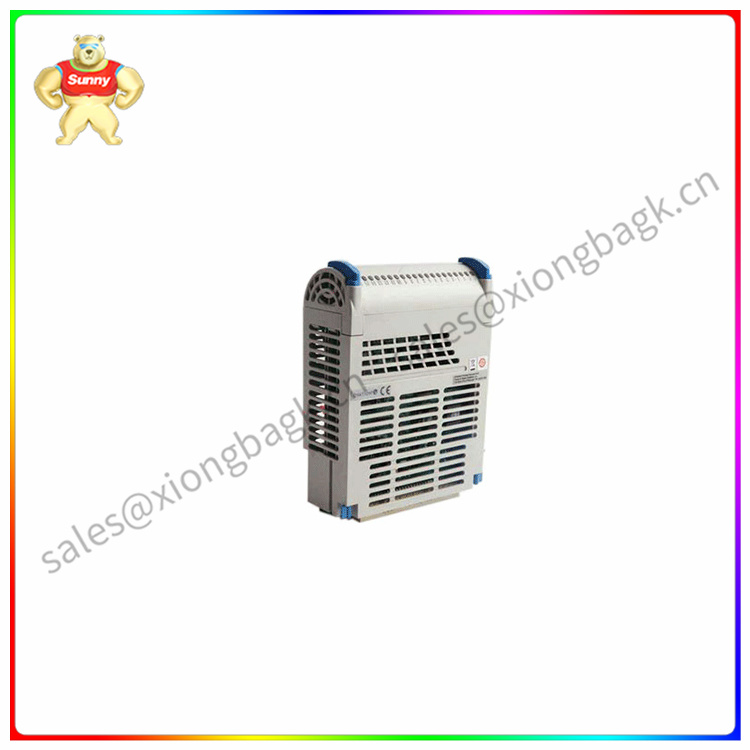
The 5X00058G01 is a component in an Emerson Ovation system, most likely an analog input module or some other type of control module. In industrial automation and control systems, the main use of analog input modules is to receive analog signals from sensors, transmitters or other field equipment and convert these signals into digital information that can be understood and processed by the control system.
Specifically, the analog input module may be responsible for receiving analog signals of continuously changing physical quantities such as temperature, pressure, flow, displacement, and so on, and then converting them into digital values so that the control system can monitor, regulate, or control the production process based on these real-time data. This module has a wide range of applications in chemical, petroleum, power, water treatment and other industries that require precise control of production processes and environmental conditions.