The SPM-D2-10 series is a microprocessor-based synchronizer designed for use in three-phase alternators equipped with Woodward or other compatible speed control and automatic voltage regulators. The SPM-D2-10 synchronizer provides automatic frequency, phase, and voltage matching using analog or discrete output bias signals. The SPM-D2-10 provides single-phase/dual-line voltage measurement with a choice of analog or discrete bias signals and race range power supplies. These synchronizers are suitable for a variety of prime movers and generators because their control letters can be set to fit several types of generator sets - from fast-reacting diesel engines to soft-reacting gas turbines.
The 8440-2167 microprocessor synchronizer is a microprocessor technology based synchronizer that is typically designed for use in three-phase alternators equipped with Woodward or other compatible speed controllers and automatic regulators to enable automatic frequency, phase, and voltage matching.
The 8440-2167 synchronizer typically uses analog or discrete output bias signals to provide automatic frequency, phase, and voltage matching, and features include:
Synchronization function: 8440-2167 can synchronize the AC frequency and phase of the generator output with the power grid.
Matching function: The generator output voltage can be matched with the grid voltage.
Control function: can realize the control of the generator.
The synchronizer of 8440-2167 microprocessor has been widely used in industry, energy, power and other fields.
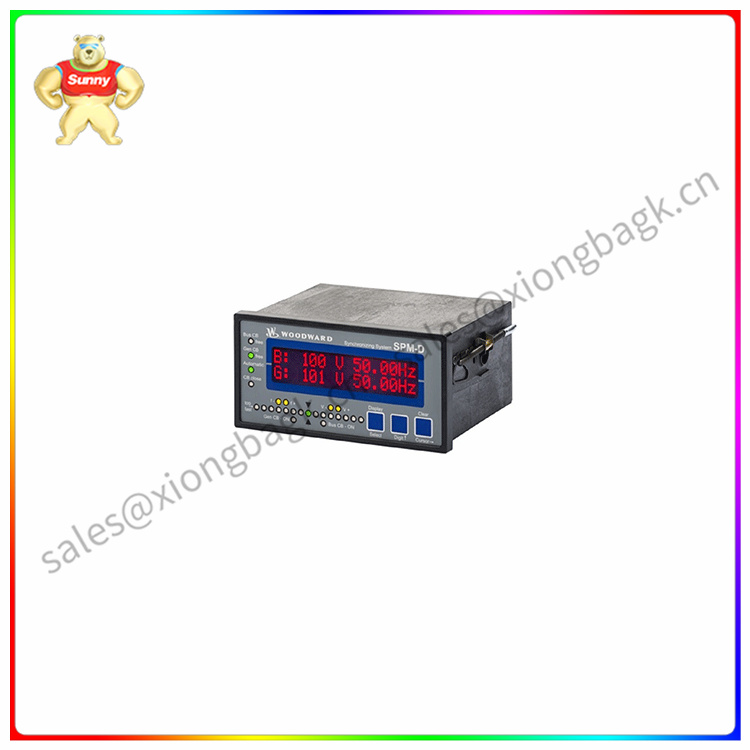
The 8440-2167 is a woodward synchronizer with the following features and applications:
Speed control: Through the input of different control signals, the 8440-2167 can accurately control the speed of the motor to achieve smooth start, stop and variable speed operation of the motor.
Position control: The synchronizer can precisely control the position of the motor, and is suitable for occasions that require accurate control of the position of the motor, such as automated production lines, robot control systems, etc.
Torque control: By adjusting the input voltage or current of the motor, the 8440-2167 can achieve torque control of the motor, which is suitable for occasions where precise torque control is required, such as medical devices, precision machining equipment, etc.
Communication function: The synchronizer supports a variety of communication protocols, such as Modbus, Profibus, etc., and can seamlessly integrate and communicate with other industrial automation equipment.
Easy to expand and configure: The synchronizer adopts a modular design, which is convenient for users to expand and configure functions, while supporting a variety of input and output interfaces, which can be connected and controlled with other control systems.
In summary, the powerful and superior performance of the 8440-2167 is suitable for a variety of industrial automation control systems requiring precise control of motor speed, position and torque.