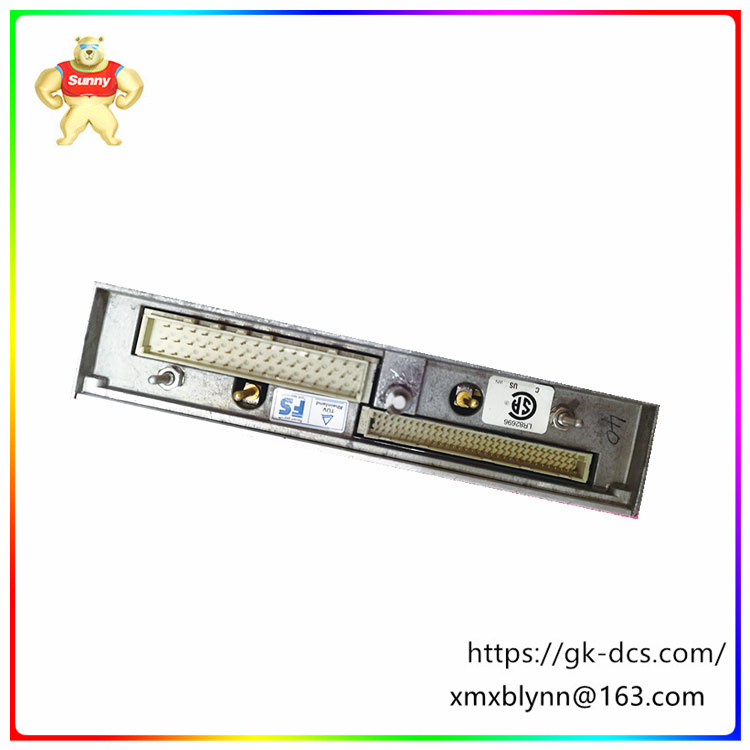
The TRICONEX 3301 is an input/output (I/O) module commonly used in Triconex systems to monitor and control signals and equipment in industrial processes. The module can be connected to sensors, actuators, switches, relays and other devices to perform control logic and data acquisition. It has multiple input and output channels for reading external signals and sending control signals. The input channel is used to monitor external signals, such as temperature, pressure, flow, etc., while the output channel is used to send signals to the actuator, such as starting and stopping the motor, opening the valve, etc.
In addition, the TRICONEX 3301 module has a high degree of reliability and stability, ensuring stable operation in industrial environments for long periods of time. It also has a fault diagnosis function that can detect and report anomalies or faults so that they can be dealt with in time.

The advantages and disadvantages of TRICONEX 3301 are as follows:
Advantages:
High reliability: The TRICONEX 3301 has a redundant design with multiple processors and I/O modules to ensure that the system continues to operate in the event of a failure, increasing system reliability and stability.
Powerful processing power: Equipped with high-performance processors, it can quickly execute complex control logic and data processing tasks, and respond to various changes in industrial processes in real time to ensure accurate control effects.
Wide range of applications: The module is used in highly reliable industrial applications such as oil and gas production, chemicals, electricity, nuclear energy and pharmaceuticals to meet the specific needs of different industries.
Flexible configuration and programming: The TRICONEX 3301 module can be configured and programmed for specific application requirements to meet specific industrial control requirements.
Cons:
The disadvantages of TRICONEX 3301 are not available at this time because specific disadvantages may vary depending on application scenarios, conditions of use, and individual differences. In general, however, the possible disadvantages of a high performance and high reliability industrial control system may include higher cost, relatively high maintenance requirements, and the possibility of additional customized configurations for some specific application scenarios.


