The WOODWARD 8440-1849 is a sophisticated engine control module designed for large-scale industrial turbines, reciprocating engines, and power generation equipment. As a flagship component in Woodward’s 8440 series, its core function is to regulate fuel delivery, manage ignition timing, and maintain optimal engine speed across varying load conditions—critical for efficiency and safety in high-power applications.
In automation architectures, the 8440-1849 acts as a central control hub, processing inputs from speed sensors, pressure transducers, and operator interfaces to adjust fuel valves and ignition systems. Its ruggedized design withstands extreme temperatures, vibration, and electrical noise, making it suitable for harsh environments like refineries and power plant turbine halls. For example, in a combined-cycle power plant, technicians mount the 8440-1849 in a climate-controlled control cabinet alongside distributed control system parts, where it coordinates gas turbine fuel flow to match grid electricity demand. This blend of precision and durability cements the 8440-1849 as a trusted industrial automation spare part for mission-critical machinery.
The 8440-1849 combines precision control with intelligent diagnostics to excel in demanding industrial environments. Its advanced PID algorithm delivers fuel regulation accuracy within ±0.2% of setpoint, minimizing fuel waste in applications like natural gas-fired turbines. Redundant Ethernet and power inputs ensure uninterrupted operation—critical for facilities where downtime costs exceed $10,000 per hour.
Diagnostics are a standout feature: the module logs 500+ fault codes, sensor drift trends, and performance metrics, accessible via web interface or DCS. This reduces troubleshooting time by up to 50% compared to legacy controls. For example, a quick glance at the event log can pinpoint a failing pressure sensor before it causes an engine trip.
Integration is seamless across diverse systems. While optimized for Woodward ecosystems, the 8440-1849 communicates effortlessly with ABB I/O modules like the ABB DO810 for expanded actuation control. Its compatibility with ABB AC 800M controllers simplifies integration into hybrid DCS architectures, making it ideal for upgrading 20-year-old systems without replacing entire control cabinets.
The 8440-1849 thrives in industries where engine performance directly impacts operational efficiency. In power generation, it regulates combined-cycle gas turbines, balancing fuel flow and air intake to maximize heat rate—critical for meeting emissions targets. Oil & gas facilities use it to control pipeline compressor engines, maintaining steady pressure across 100+ mile networks.
Marine applications benefit from its ruggedness, where it manages propulsion engines in saltwater environments, withstanding humidity and vibration. A recent retrofit at a biomass plant illustrates its value: technicians replaced a 1990s-era control system with 8440-1849 modules, reducing fuel consumption by 7% and cutting unplanned downtime from monthly to quarterly occurrences.
Mining operations also rely on it to control large diesel generators, optimizing fuel use while preventing overheating in remote locations where maintenance crews are days away.
- 8440-1848: Previous generation control module, compatible with legacy Woodward systems.
- 8440-1850: Ethernet-enhanced variant of 8440-1849 with expanded cloud connectivity.
- 5501-467: Woodward governor module, pairs with 8440-1849 for redundant speed control.
- ABB DO810: Digital output module, integrates with 8440-1849 for valve actuation in hybrid setups.
- 8290-191: Speed sensor interface module, complements 8440-1849 for precise rotational feedback.
- 8440-1851: High-temperature version of 8440-1849 rated for +85°C environments.
- 8440-1852: Redundant control system, combining two 8440-1849 modules for fault-tolerant applications.
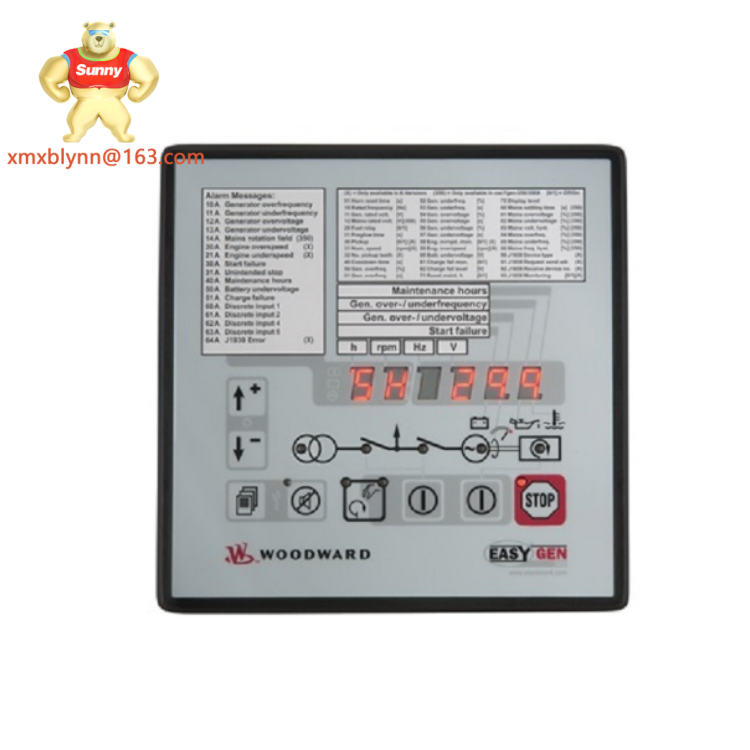
Installing the 8440-1849 requires mounting it on a 35mm DIN rail in a control cabinet with 100mm clearance for ventilation—critical for heat dissipation in turbine halls. Ensure a dedicated ground connection (10 AWG minimum) to minimize electrical noise, which can disrupt sensor signals. Follow polarity markings when connecting fuel valve outputs to avoid calibration errors.
For maintenance, conduct monthly checks of status LEDs (green for normal, amber for warnings) and review diagnostic logs via Ethernet. Xiamen Xiongba recommends annual calibration of analog inputs using certified standards and firmware updates every 12–18 months. Back up configurations to a secure server quarterly, and inspect terminal block screws for tightness during each shutdown—vibration can loosen connections over time.
The 8440-1849 is backed by a one-year warranty and free replacement service provided exclusively by Xiamen Xiongba E-commerce Co., Ltd. Branch, not the original equipment manufacturer. Customers can initiate claims by contacting Xiamen Xiongba’s technical team with the module’s serial number and purchase documentation for verification.
Xiamen Xiongba E-commerce Co., Ltd. Branch specializes in industrial automation distribution and global procurement. We provide a one-year warranty and free replacement service, sourcing DCS, PLC, MVME modules, Anybus converters, RTU modules, industrial PCs, low-frequency displays, and SCSI HMIs to solve procurement challenges with competitive pricing. Pre-shipment testing, datasheet verification, and serial-number traceability ensure product reliability.


